
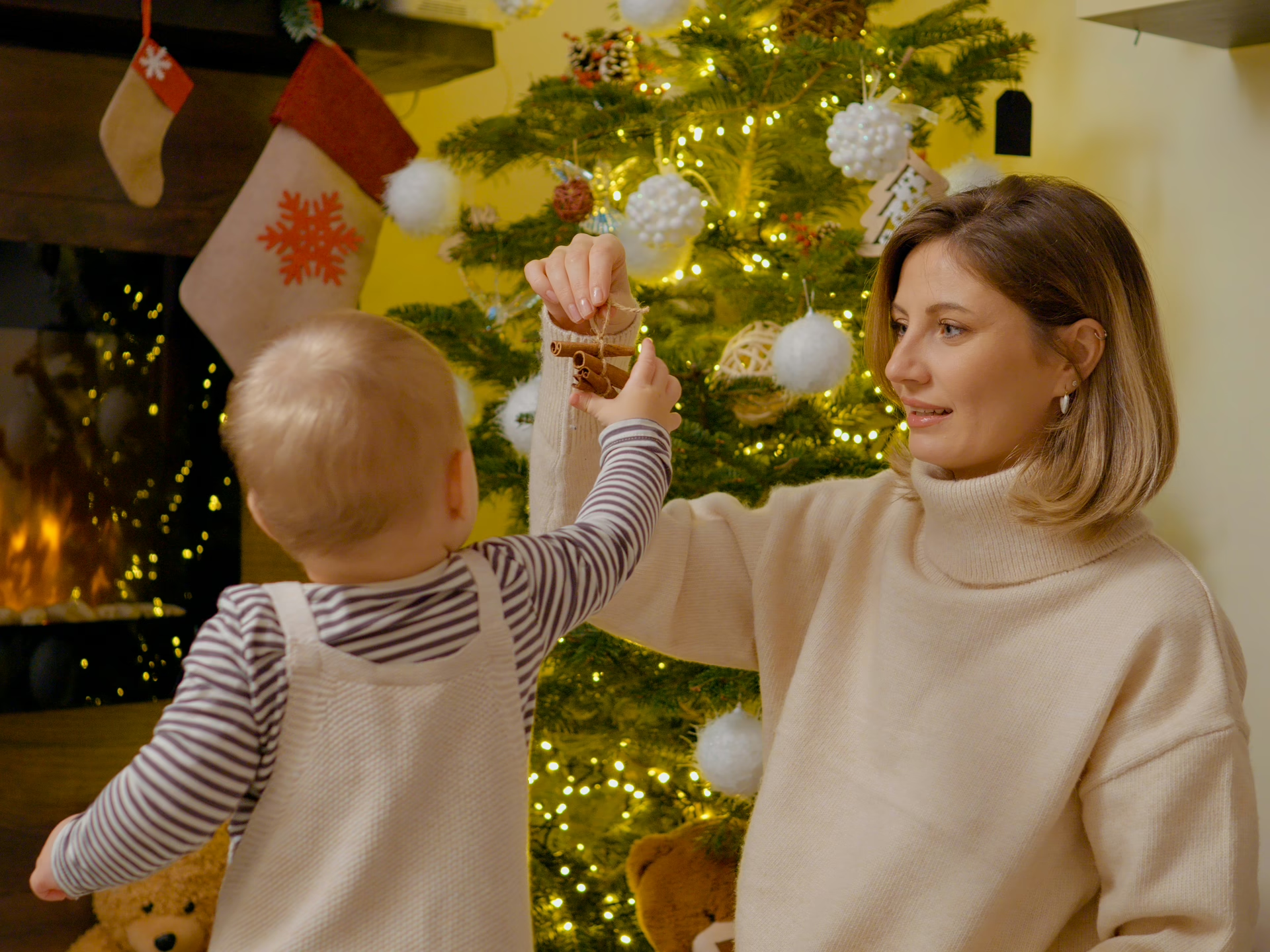
No one wishes to be feuding at Christmas time. To help support separated parents during this festive period, we have put together a few top tips for ensuring that Christmas contact is arranged without problems and disputes.
1. Make Proposals in Advance
One of the biggest problems we see as family solicitors in the weeks before Christmas is parents attempting to arrange Christmas contact way into December.
It is understandable that both parents will want to spend time with their child or children at Christmas time. This is why it is imperative that proposals are made far enough in advance to allow an open dialogue and negotiations in the child’s best interests.
If verbal communication between the parents is not an option, they should consider other methods of communication such as text message or email proposals.
Allow time for professional help if needed
In the event that the parents are unable to agree directly, this also means there is enough time to make a referral to mediation or consult a solicitor to aid in this process.
2. There Is No Set Formula for Christmas Arrangements
It is whatever works best for the child. Here are some practical solutions that work for many families:
Splitting Christmas Day
Some parents split Christmas day in half. Parent one wakes up with the child on Christmas morning. Then at a mutually agreed time, the child is collected by parent two to spend the remainder of the day with them.
Alternating Years
Some parents may alternate Christmas day on a yearly basis. The child will spend Christmas Eve and Christmas Day in year one with parent one. The following year, the child will spend Christmas Eve and Christmas Day with parent two.
Usually, the parent who the children don’t spend Christmas day with spends Boxing Day or New Year with them instead. This allows the child to enjoy a ‘second Christmas day’ with that parent. The routine can be alternated each year.
Consider the Logistics
It is important to keep logistics in mind. Most parents wish to see their child on Christmas day. However, if the parents live some distance away from each other, is it really fair to expect the child to spend most of the special day travelling in the car?
3. Be Careful Not to Give the Child Mixed Signals
Many separated parents agree that they should spend Christmas day together. The idea is to allow the children to open their presents and enjoy Christmas lunch with both parents.
Whilst this can work well in some families, where parents are amicable and there are no third parties such as new partners to consider, in many cases this simply doesn’t work.
Why spending Christmas together can be problematic
Firstly, there is the possibility of the child witnessing animosity between their parents. This should not happen any day of the year, let alone Christmas.
Secondly, seeing the parents working together and remaining amicable during Christmas day may confuse the child. It may provide them with false hope that mummy and daddy are going to reconcile. They may find this difficult to deal with when, come Boxing Day, mummy and daddy are back in their separate houses with their separate lives.
4. Discuss Gifts in Advance
In addition to contact arrangements, it may be prudent to have an open dialogue about gift purchases for your child.
It is important that neither parent adopts a competition mentality around special occasions. Although your child will no doubt appreciate the latest Disney princess or games console, he or she would benefit far more by seeing that his or her parents can get along amicably and facilitate good quality contact through this special time.
5. Remember That the Child or Children Are Paramount
Arrangements must be made to ensure they have an enjoyable Christmas period and spend good quality time with both parents.
There is no better time than Christmas to put your differences aside and work together for your children. After all, it is the season of good will.
FAQs About Christmas Arrangements
Getting Help with Christmas Arrangements
If you need support arranging Christmas contact or have concerns about child arrangements, our experienced family law solicitors can help.
Contact our Family Law Support Team on 01908 660966 or email familysupportteam@franklins-sols.co.uk.
Disclaimer: The information provided on this blog is for general informational purposes only and is accurate as of the date of publication. It should not be construed as legal advice. Laws and regulations may change and the content may not reflect the most current legal developments. We recommend consulting with a qualified solicitor for specific legal guidance tailored to your situation.