- Milton Keynes 01908 660966
- Northampton 01604 828282



The Court of Justice of the European Union (CJEU) in the case of Sky v SkyKick (C-371/18) has made the landmark decision that the use of broad terms in trade mark specifications such as “computer services” cannot be ruled invalid on the basis that they are unclear and imprecise or contrary to public policy. Furthermore, the CJEU decided that the owner of a trade mark will not be regarded as having acted in bad faith because there was no economic activity in relation to the goods and services covered by its broad specification at the time it was filed. Accordingly, this means that trade mark proprietors do not need to change or amend existing trade mark specifications which use broad terms and therefore, this case has been described as a “welcome relief for brand owners” who wish to maintain broader protection.
The case arose when the UK TV broadcaster Sky plc sued SkyKick, a cloud software company for trade mark infringement in relation to their use of the word “SKY” in their SkyKick sign and its variants. SkyKick counterclaimed and argued that Sky’s trade marks were invalid on two grounds:
- the specifications lacked clarity and precision, particularly in relation to goods and services; and
- the subsequent trade mark application was made in bad faith. The CJEU answered the following questions which were referred by the High Court.
- Does the use of broad terms in trade mark specifications such as “computer software” mean that a registration is so unclear and imprecise that is should be declared invalid?
The CJEU decided that a lack of clarity and precision in a trade mark specification does not render that trade mark invalid. However, if the trade mark has not been used in connection to the goods and services it was registered for, it can be rescinded after 5 years. Nevertheless, if non-use only applies to a few of the goods or services for which the trade mark was registered, only those goods and services will be rescinded and rest of the trade mark will still exist.
- Does applying to register a trade mark without any intention to use it in connection to the specified goods or service constitute bad faith and thus render the trade mark invalid?
The CJEU held that the registration will only be constituted as having been made in bad faith if the applicant had the “intention of undermining, in a manner inconsistent with honest practices, the interests of third parties, or of obtaining, without even targeting a specific third party, an exclusive right for purposes other than those falling within the functions of a trade mark”. Consequently, bad faith cannot be assumed because there was no economic activity corresponding to the goods and services at the time of the application.
If you require legal assistance regarding trade marks, or have any other intellectual property concern, please do not hesitate to contact Christopher Buck, Associate Partner in our Business Services Department on 01908 660966 / 01604 828282 or at christopher.buck@franklins-sols.co.uk who will be happy to assist.
A scientist has been awarded £2 million compensation by The Supreme Court after a 13-year legal battle. The claim was brought under section 40 of the Patents Act 1977. The Supreme Court overturned the previous decisions in the case and held that Professor Ian Shanks, a former employee of Unilever UK Central Resources Ltd (“CRL”) had made a patented invention which had provided his former employer with an “outstanding benefit”.
What is a patent?
A patent is an intellectual property right granted by the government which gives the owner the legal right to exclude others from using, making, selling and importing an invention for a limited period. A UK patent has a 20 year life-span. The law relating to employees’ inventions is governed by sections 39 to 43 of the Patents Act 1977 (“the Act”).
Background to the case
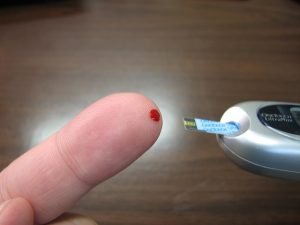 In 1982, whilst employed by CRL, Professor Shanks created a new system for measuring the concentration of glucose in blood and other liquids by using glass slides and plastic film from his daughter’s toy microscope kit and bulldog clips to hold it together. This technology was then used in most glucose testing products.
Professor Shanks accepted that the intellectual property rights to his invention belonged to CRL under section 39(1) of the Act as it had been created during the course of his normal duties. However, after witnessing the success that his invention had brought to Unilever, Professor Shanks decided to apply for compensation at the Intellectual Property Office (UKIPO) in 2006 on the basis that his patents provided a ‘outstanding benefit’ to his employer and he should be entitled to a fair share of the benefit. The UKIPO found that, having regard to the size and nature of Unilever’s business, the benefit provided by the Shanks patents fell short of being outstanding. The UKIPO went on to consider what a fair share of the benefit would have been had the benefit been considered to be outstanding. It was concluded that in the context of section 41 of the Act that 5% would have been appropriate. The UKIPO declined to increase this figure to take into account the time value of money.
Professor Shanks appealed to the High Court and the appeal was dismissed by Arnold J. He held that the UKIPO had made no error in finding that the patents were not of outstanding benefit to Unilever and that a fair share of the benefit would have been only 3%. He also concluded that it was not appropriate to take into account the time value of money. Furthermore, an appeal to the Court of Appeal was also dismissed.
The appeal to the Supreme Court gave rise to the following questions:
- What are the governing principles that need to be taken into consideration to correctly assess outstanding benefit to an employer?
- How should a fair share of an outstanding benefit be assessed?
In relation to outstanding benefit, Lord Kitchen held that the meaning of outstanding is an ordinary English word meaning “exceptional or such as to stand out”. Section 40(1) of the Act seeks to put this in context by requiring the assessment to take into consideration “the size and nature of the employer’s undertaking”. This can be difficult to assess, as with the case at hand, where the invention was made within a small subdivision (CRL) of a large company, Unilever, and it was the large multinational company that took the benefit, not the subdivision. Lord Kitchen held that the notion of comparing the profit generated from the patents to the overall revenue of Unilever should be disregarded. Instead, it was concluded that the Shanks patents were of outstanding benefit because in comparison to other inventions protected by patents of Unilever, the Shanks patents had made significant contributions to Unilever’s profits and thus stood out. Additionally, the benefit received from the Shanks patents correlated to the licensing of the invention itself and not from Unilever’s effort to commercialise the invention.
In assessing fair share of compensation, section 41 of the Act needs to be taken into account. Lord Kitchen agreed with the UKIPO that an appropriate fair share of the outstanding benefit was 5%. He rejected Professor Shanks’s argument that 10-20% of the benefit would amount to a fair share on the grounds that, whilst the patent generated a new stream of income for Unilever, this was “brought to fruition by Unilever’s negotiation of the licences” and Professor Shanks played no role in this. On that basis, Lord Kitchen awarded Professor Shanks £2 million compensation taking into account the impact of time on the value of money.
The Supreme Court’s judgement provides a wider scope for what constitutes an outstanding benefit and thus improves the prospects of employee inventors being able to claim compensation for the outstanding benefit resulting from their inventions.
If you need legal assistance visit our patents page here.
Patents provide important protection for your inventions. If you require legal assistance regarding patents, then please do not hesitate to contact Christopher Buck, Associate Partner in our Business Services Department on 01908 660966 or at christopher.buck@franklins-sols.co.uk who will be happy to assist.